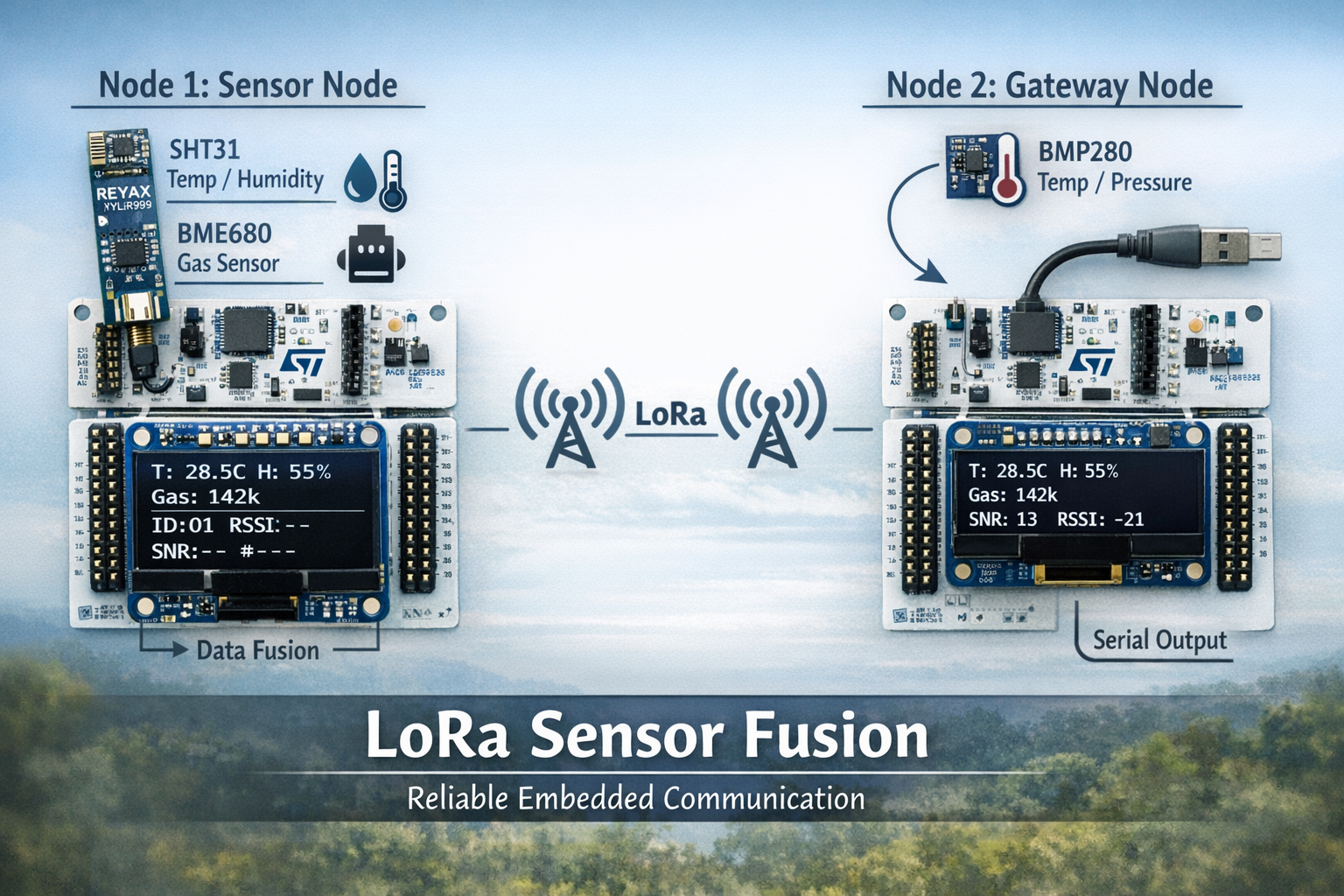
STM32F446RE NUCLEO board with SSD1306 OLED display

LoRa Sensor Fusion: When "Simple" Becomes Reliable - Wk2

Building a reliable embedded system involves far more than getting code to compile. It’s a process of learning where hardware limits, timing guarantees, and data representation quietly shape everything above them. Week 2 of the Plan focused on making those constraints explicit. The result is a dual-node LoRa sensor fusion system built on the STM32F446RE using Rust and RTIC 1.1 — not as a showcase, but as a foundation. Table of Contents The Objective System Overview Five Critical Lessons Lesson 1: The 51-Byte Myth Lesson 2: UART Timing Lesson 3: Sensor Fusion Lesson 4: Data Representation Lesson 5: Shared Hardware Results Why This Matters Next Steps The Objective The goal for this week was deliberately narrow: ...
Dec 5, 2025 · 13 min
STM32F446RE NUCLEO board with SSD1306 OLED display

Building Deterministic IIoT Systems With Embedded Rust and RTIC

In the world of Industrial IoT (IIoT), reliability is everything. Sensors must read accurately, actuators must respond predictably, and communication must flow without surprises. On the embedded side, this means precise control of hardware resources, minimal overhead, and code that behaves deterministically. Enter Embedded Rust and RTIC—a pairing that gives engineers both safety and performance without compromise. Why Embedded Rust? Rust’s focus on memory safety, zero-cost abstractions, and strict compile-time checks makes it ideal for embedded systems. Unlike C, Rust prevents entire classes of bugs like null pointer dereferences or buffer overflows. When your MCU has just a few kilobytes of RAM, these protections are not optional—they’re essential. ...

Dec 2, 2025 · 4 min
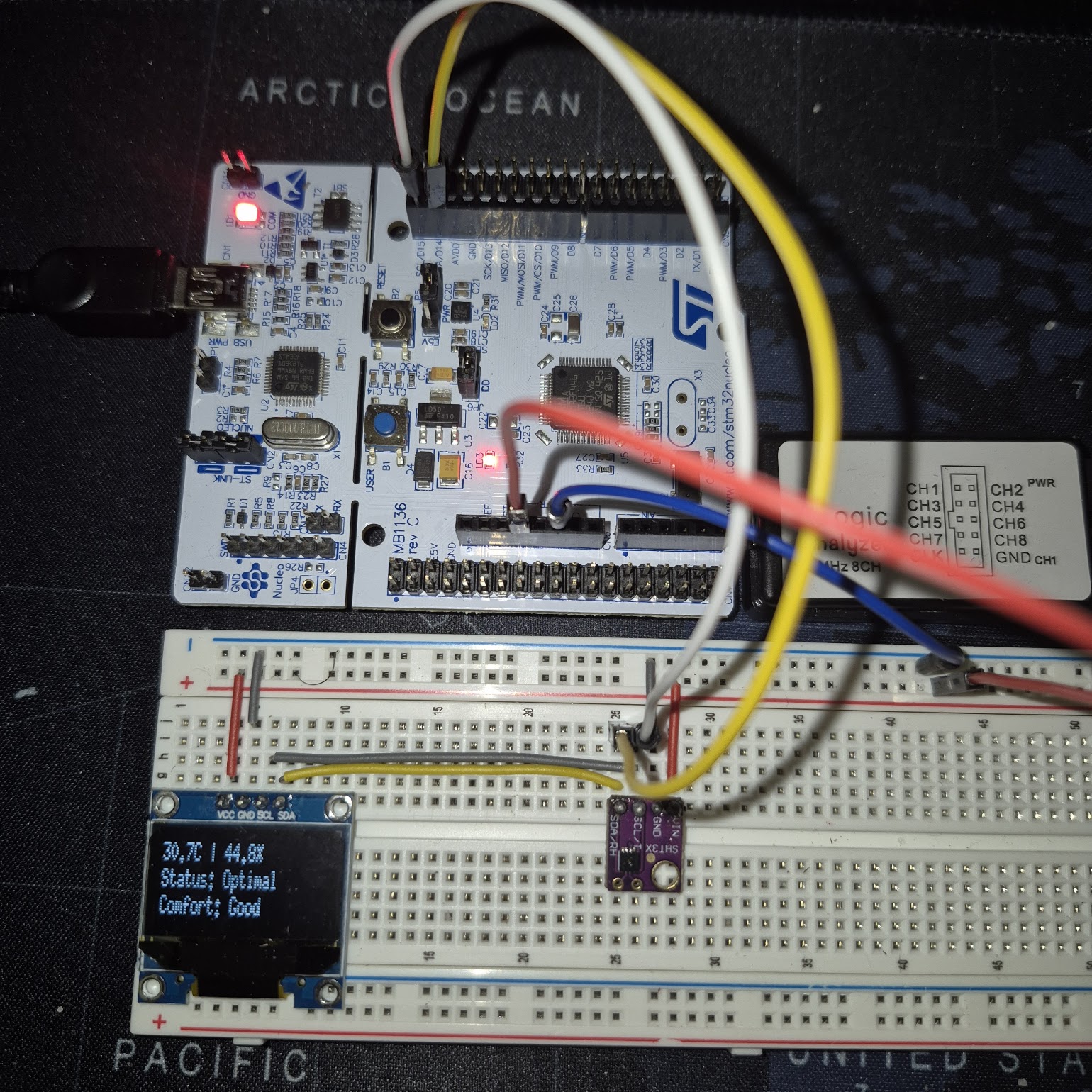
STM32F446RE NUCLEO board with SHT31-D temperature & humidity sensor and SSD1306 OLED display

Building an IIoT Sensor Node With Embedded Rust and Stm32

1. Introduction I come from a networking background. For years, my world revolved around packets, routing tables, latency, and uptime. Over time, it became clear that the boundary between IT and OT (Operational Technology) was becoming less rigid as industrial systems moved onto standard IP networks. Networks were no longer just carrying business traffic — they were increasingly responsible for transporting sensor data, telemetry, and control signals from the physical world. That realization pushed me toward Industrial IoT (IIoT) and, inevitably, embedded systems. ...

Nov 18, 2025 · 9 min